
Macro Synthetic Fibers as a Superior Alternative to Steel Fibers for Concrete Reinforcement
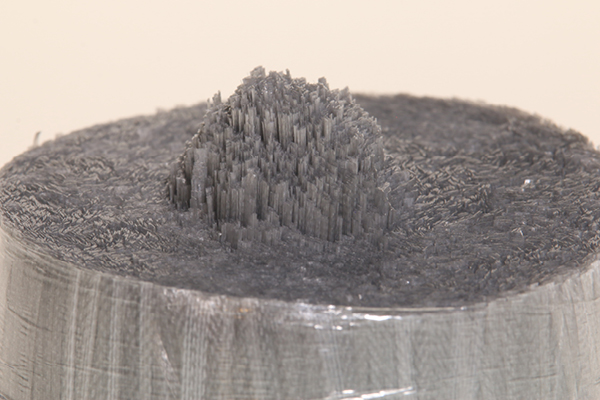
Steel fibers have long been used in concrete to enhance post-crack performance, impact resistance, and flexural toughness. However, macro synthetic fibers, typically engineered and produced from high-strength polymers, are increasingly recognized as a viable and often superior alternative. Products such as Adfil®Strux offer comparable reinforcement while delivering significant advantages in finishability and cost-efficiency.
Durability and Structural Performance
Macro synthetic fibers are designed to provide post-crack control, improving the toughness and fatigue resistance of concrete. Their three-dimensional dispersion within the concrete matrix ensures uniform reinforcement, reducing crack width and enhancing impact resistance.
Performance comparisons show that macro synthetic fibers can typically exceed the residual flexural strength of steel fibers. For example, Adfil®Strux 90/40 has demonstrated equivalent performance to steel fibers at significantly lower dosages. Often, replacing steel fibers with macro synthetic fibers can be done anywhere from 4-8 pounds of steel fibers per cubic yard, to just one pound of macro synthetic, depending on the steel fiber type and shape.
Improved Finishability and Pumpability Over Steel Fibers
One of the most notable advantages of macro synthetic fibers over steel fibers is their superior finishability and pumpability. Steel fibers, due to their rigidity and weight, often protrude through the concrete surface, complicating finishing operations and requiring additional labor to achieve a smooth finish. In contrast, macro synthetic fibers are lighter, more flexible, and blend seamlessly into the concrete matrix.
For the concrete finishing contractor, macro synthetic fibers allow for easier placement and finishing due to their ability to delay bleed water and reduce surface irregularities. Techniques such as laser and vibratory screeds work exceptionally well with fiber-reinforced concrete, and external vibration helps bring paste to the surface, improving surface quality. These fibers also reduce the likelihood of visible fiber protrusion, especially when proper finishing timing is observed.
Pumpability is another area where macro synthetic fibers outperform steel. Their lighter weight and pliability reduce abrasion to pumping lines and equipment, allowing for smoother flow and fewer blockages. This makes them ideal for applications requiring long-distance pumping or complex formwork.

Environmental Benefits that Lower CO₂ and GWP
When synthetic macro fibers are used to replace welded wire reinforcement or steel fibers, the embodied carbon reduction is driven primarily by the significant reduction in material weight and volume required to achieve equivalent crack control and flexural performance. While the carbon intensity per kilogram of polypropylene is similar to or slightly higher than that of steel, typical fiber dosages are an order of magnitude lower, resulting in a substantially lower cradle-to-gate CO₂ footprint per cubic meter of concrete. Additional savings can result from simplified placement, reduced handling, and elimination of wire mesh fabrication and transport.
Macro synthetic fibers are also non-corrosive, making them ideal for exterior pavements and architectural applications where aesthetics and long-term durability are critical. Their use supports sustainable construction practices and aligns with industry goals for decarbonization and resiliency.
One example of this commitment to sustainable innovation is the use of Adfil®Strux 75/32 macro synthetic fibers in the Seattle Storm Training Facility. Faced with constructability and sustainability challenges in tilt-up architectural panels, the project team replaced traditional welded wire mesh (WWM) with synthetic fibers. The panels, just 2.5 inches thick with 1-inch corrugation, made WWM placement difficult without compromising aesthetics.
By dosing 4 pcy of Adfil®Strux 75/32, the team achieved:
- Effective crack control
- Improved surface finish
- A 90% reduction in embodied carbon per square foot of reinforcement, dropping from 1.75 kgCO₂eq/sf (steel mesh) to just 0.18 kgCO₂eq/sf (fiber)
This substitution not only delivered technical performance but also demonstrated a significant environmental benefit.
Cost Savings: Time and Product Efficiency
While macro synthetic fibers may have a higher per-pound cost than steel, the overall installed cost is frequently lower due to several key factors:
- Labor Reduction at the project site. Fibers are added during concrete batching operations, streamlining construction workflows.
- Faster Placement: Eliminates delays associated with steel installation on site, allowing immediate concrete placement.
- Improved Safety: No sharp edges or trip hazards, reducing jobsite injuries and insurance costs.
- Storage and Handling: Products like Adfil®Strux 3000 series come in puck-style packaging, almost tripling pallet capacity and simplifying logistics.

In precast applications, these efficiencies translate into faster cycle times, reduced labor costs, and fewer rejected units due to misplacement or corrosion of steel reinforcement. Macro fibers also improve finishability and reduce rebound in shotcrete, further enhancing productivity.
Application Versatility
Macro synthetic fibers are suitable for a wide range of applications, including:
- Slab-on-ground flooring
- Composite steel deck assemblies
- Precast elements (e.g., septic tanks, vaults, walls)
- White toppings and overlays
- Slip-form or other extruded applications, and industrial slabs
Design tools, such as the Adfil®Strux Calculator Mobile App (Apple / Android), allow engineers to calculate appropriate dosages based on project-specific parameters, ensuring compliance with ASTM, ACI and ANSI/SDI standards.
Conclusion
Macro synthetic fibers offer a compelling alternative to steel fibers in concrete reinforcement. With proven benefits in, sustainability, finishability, pumpability, and cost-efficiency, they are reshaping how the industry approaches fiber reinforced concrete. As construction moves toward greener and more efficient practices, macro synthetic fibers stand out as a forward-thinking solution.
For further technical guidance, refer to our Adfil®Strux product page or contact us to help make the switch.