
The benefits of clinker microscopy
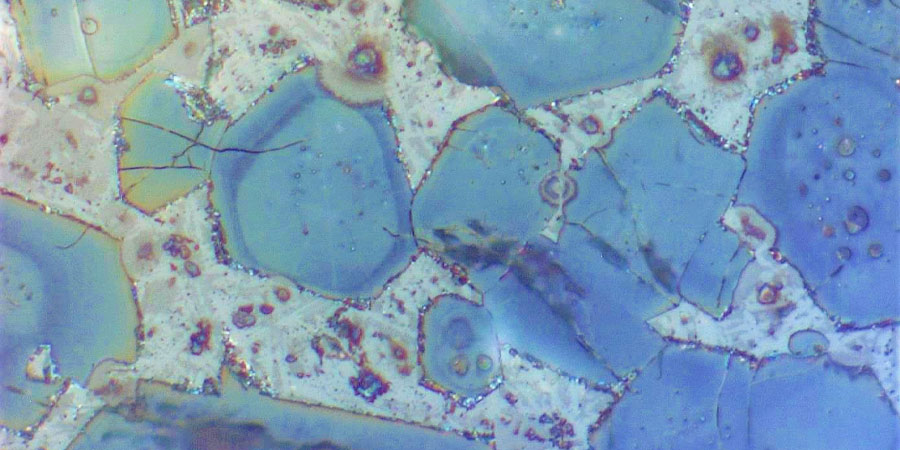
The microstructure of clinker has a marked influence on the majority of cement and concrete performance characteristics, including water demand, workability, as well as setting and strength development. However, study and interpretation of clinker microstructure remains relatively complex and generally non-standardized, making it difficult to use for the routine prediction of cement and concrete performance.
Evaluating clinker through chemical analysis such as XRF and compositional phase analysis by QXRD alone does not consistently identify obvious cement performance characteristics in either the finished cement or concrete. Subtle or gross microstructural variations between clinkers are often the culprit and can be caused by changes in the kiln operation or raw feed. Thus, clinkers that are compositionally identical in XRF and QXRD can have markedly different performance characteristics.
Clinker microstructure has been widely studied through numerous microscopic methods, including petrographic thin sections and the “Ono” method. However, these techniques have limitations in the general understanding of clinker characteristics, and often it is difficult to compare the quality of clinkers from different sources using these methods.
A preferred approach is a whole clinker optical microscopy method, which uses microscopic examination of intact nodules of various size fractions, taken from a larger representative sample. The technique allows for direct observation of the clinker microstructure and composition, showing alite, belite, interstitial phase, and other characteristics, such as porosity, homogeneity, alkali sulfate, free lime, and calcium sulfate, to better understand the thermal history of the clinker.
These insights allow for evaluation of alite size, temperature and atmosphere, cooling rate, raw feed characteristics, and more. This can inform decisions about the clinker used. For example, it is evident that harder burning and slower cooling results in larger estimated average crystal size, which tends to result in reduced strength. Harder burning also tends to produce clinker with a higher fines content that is more difficult to grind.
Optical microscopy is a powerful tool to investigate and optimize clinker quality and ultimately cement performance. Chryso has been able to use optical microscopy to find links between microstructure and cement additive performance. It is also possible to employ scanning electron microscopy with energy dispersive x-ray analyses on the same samples to confirm potential compositional differences in line with the observations made on the optical microscope.