
VIDEO: Air-Entrainment Rapid Air Test for Concrete
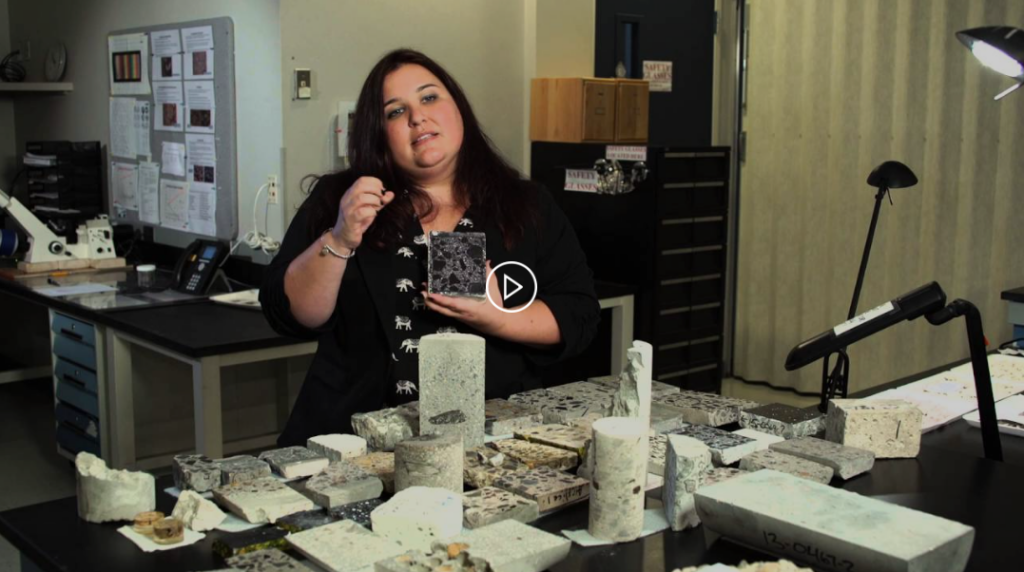
One of the techniques our company leverages—that a lot of other companies don’t use—is the Rapid Air System for air void analysis of concrete. This ensures the proper air-entrainment has been applied to the concrete in question.
Alternative to the less efficient manual method, which can take a long time and encounter inconsistencies due to human error, we run a computerized rapid air machine. That way, scientists know that all of the data acquired is correct. They can also run a lot of tests quickly.
Scientists take a cut and polished concrete sample—used in petrographic analysis—blacken the surface and fill in the voids with white powder. The computer is able to count the white voids—how big the bubbles are and how close they are together.
This tells scientists if the concrete is freeze/thaw durable.
Our engineers design many air-entrainment concrete admixtures to ensure the correct amount and dispersion of bubbles form in concrete to protect against freeze/thaw damage.