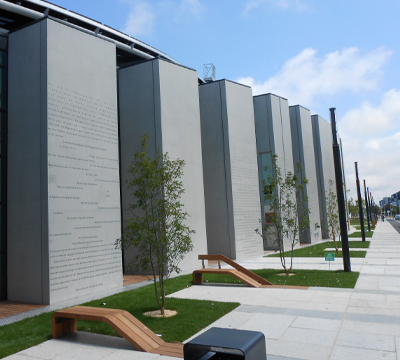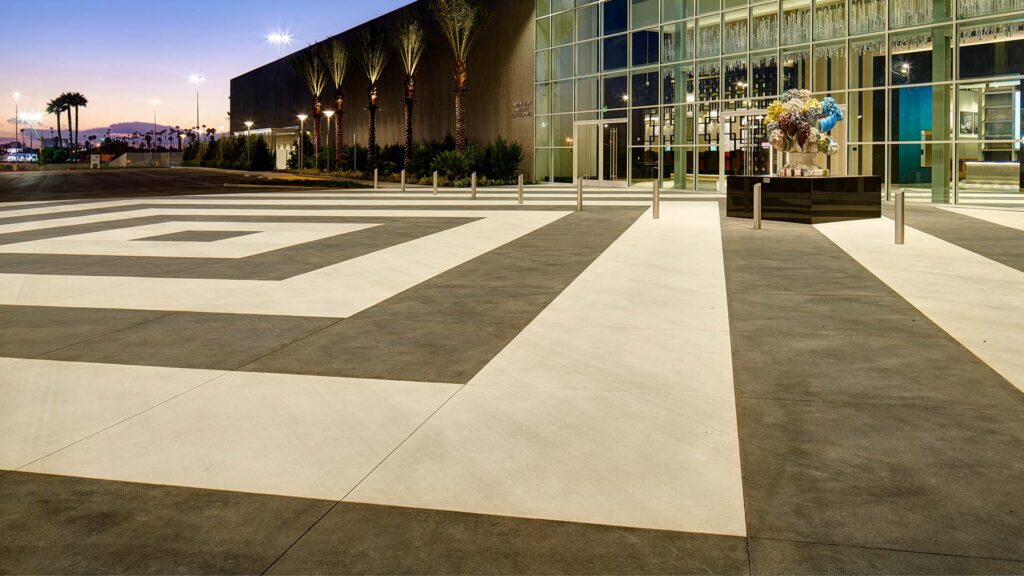

Decorative concrete is a term used to define concrete that is treated with special pigments, textures, finishes, and performance enhancers to ensure both aesthetic appeal and long-term performance. These products are mostly used for both architectural and commercial purposes, including residential applications such as floors, walls, facades, precast, pavements, and other spaces, where the user desires a concrete product with aesthetic appeal and sufficient functionality.

Decorative concrete enables the user to attain uniform color, high-quality appearance, and good workability of the concrete product, all of which are achieved with the use of special pigments, admixtures, and finishers. 

Chryso has a remarkably wide range of decorative concrete solutions available in the market, covering both pigments and admixtures, with the main aim of ensuring the user achieves the best aesthetic appeal, functionality, and production efficiency for all types of decorative concrete applications.

Decorative Concrete Products

Interstar Concrete Pigments

Interstar has been developing and manufacturing pigment for concrete for over thirty years. Interstar has perfected granular pigment for ready mix concrete. They design and manufacture all of our own granular pigment dispensers.

PIERI® Decorative Solutions

PIERI® release agents improve the efficiency of your production process by preventing concrete from sticking to molds, resulting in a smooth, high-quality finish.

Chryso®Top-Cast

Chryso Surface Treatments offer a comprehensive range of solutions designed to enhance and protect concrete surfaces. Our offerings include Surface Protectants and Surface Retarders, each tailored to meet specific needs.

Decorative concrete is concrete designed to deliver aesthetic finishes (color, texture, pattern, exposed aggregate, or polished looks) while still serving as a durable structural or paving material. It’s achieved using methods like integral color (pigments), stamping, staining, surface retarders (for exposed aggregate), overlays, or polishing.

Decorative concrete is commonly used for driveways, patios, walkways, interior floors, pool decks, plazas, and architectural elements where appearance matters as much as performance. It’s popular because it can mimic stone/brick/wood looks, support custom color palettes, and maintain the durability expected from concrete surfaces.

Concrete pigments are coloring admixtures—often synthetic iron oxides—added to the mix to create integrally colored concrete (color throughout the slab, not just on the surface). Pigments are available in granular and powder forms designed for consistent dispersion and color reliability in cementitious materials.

ASTM C979/C979M is a standard specification for pigments used to make integrally colored concrete, covering requirements and test methods for pigment performance in concrete. When a pigment is stated as meeting or being certified to ASTM C979, it indicates alignment with that specification for integral coloring applications.

A concrete release agent (also called form release or mold release) is applied to formwork or molds to help concrete separate cleanly during stripping/demolding and to support a high‑quality surface finish. Chryso’s release agent portfolio is positioned for multiple formwork types and emphasizes surface finish, mold protection, and performance criteria.

Release agent performance depends on multiple job variables, including the nature of the formwork, environmental/application conditions, and the concrete placing process. Chryso notes criteria such as formwork type, EHS requirements, corrosion protection needs, and conditions like temperature/wind, all of which can influence finish quality and demolding results.

A concrete surface retarder (also called a surface deactivator) is applied to fresh concrete to delay the set of the surface mortar only, allowing the underlying concrete to cure normally. After the slab hardens, the top paste can be washed/removed to create an exposed aggregate decorative finish with controlled depth of reveal.

Curing is about supporting cement hydration early by retaining moisture (often starting right after finishing), while sealing is a protective step intended to reduce staining, wear, and moisture intrusion after the concrete has sufficiently cured. Decorative concrete best practices commonly distinguish sealer types and note that curing time can vary by method and conditions.

Want to offer Decorative Concrete Products to Your Clients?

By offering color, texture, and finish choices, you give clients a sense of ownership and creative control while still delivering the durability, longevity, and low‑maintenance performance they expect from concrete.

Contact Us