
Resilience in Sustainable Building: The Chryso Approach
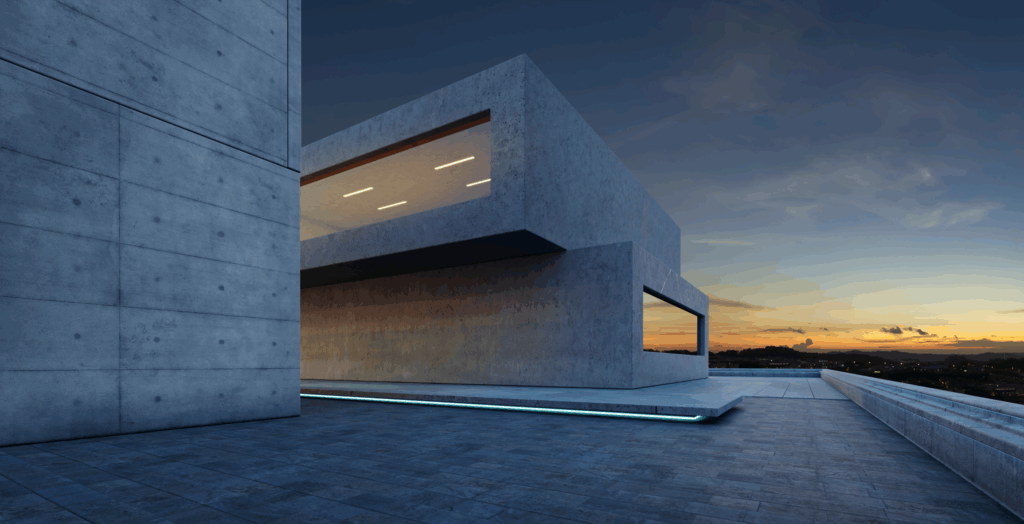
In the ever-evolving landscape of sustainable construction, resilience has emerged as a critical component. As we face increasing environmental challenges, the ability of buildings to withstand natural disasters and long-term environmental stressors is paramount. This article explores exemplary projects, including infrastructure and commercial developments, that highlight how the Chryso team of engineers, R&D, and technical field experts alongside performance-based solutions enhance concrete’s durability, adaptability, and sustainability.
Resilient Building Examples
Infrastructure Resilience: Delaware Memorial Bridge
The Delaware Memorial Bridge rehabilitation exemplifies resilient infrastructure. Faced with aging structural components and high traffic volumes, the Delaware River & Bay Authority selected Ultra-High-Performance Concrete (UHPC) to extend the bridge’s lifespan without adding weight. Chryso admixtures enabled efficient mixing and curing within tight construction windows, minimizing traffic disruption. The UHPC overlay extended the deck’s service life by over 50 years, showcasing how advanced materials and strategic planning can modernize infrastructure while preserving daily operations.
Commercial Resilience: Gage Brothers Steel District
In Sioux Falls, South Dakota, the Steel District project by Gage Brothers demonstrates resilient design in commercial construction. As the first mid-rise in North America to use UHPC in a total precast solution, the project achieved expansive clear spans, eliminating interior columns and enabling flexible office layouts. Admixture technology, including Chryso®AdvaCast 593 and Chryso®AdvaCast 555, supported early strength gains and reduced carbon footprint. This approach minimized concrete usage while enhancing structural performance, delivering a durable and adaptable building that meets long-term sustainability goals.
Beyond technical achievements, these projects reflect a broader shift toward resilient design, where durability, adaptability, and sustainability converge. Whether preserving vital infrastructure or enabling flexible commercial spaces, Chryso admixture technologies empower builders to meet today’s challenges and prepare for tomorrow’s demands.
The Economic and Environmental Benefits
Investing in resilient design is not just good practice; it’s smart economics. According to the National Institute of Building Sciences, every dollar invested in resilient design saves four dollars in recovery costs. As climate-related disasters become more frequent, the cost of inaction grows exponentially.
Our commitment to resilience is evident in our collaboration with industry stakeholders to develop and implement low-carbon concrete solutions. These efforts not only enhance the durability of concrete structures but also contribute to significant reductions in CO₂ emissions.
For instance, the EnviroMix® family extends the use of supplementary cementitious materials (SCMs) and enhances strength while maintaining concrete performance and quality. This innovation not only reduces the carbon footprint but also enhances the durability of concrete structures. Additionally, water reducers like Chryso®AdvaCast, improve concrete strength and workability with less water, further contributing to the sustainability of construction projects.
These admixture technologies deliver clear economic and environmental gains. In the Midwest, production homebuilders using EnviroMix® SE 30 reduced cement by 30-50 lbs per cubic yard, cutting CO₂ emissions by 10% per mix, while maintaining or improving strength. These savings translate to lower costs and a smaller carbon footprint, especially in high-volume residential construction.
The Quad® series enables producers to optimize mixes with local, lower-quality sands and increase SCM use, achieving up to 24% embodied carbon reduction and the potential for significant savings. For example, one customer’s SW operations leveraged Quad® and Chryso®Optima to maximize natural pozzolan, meeting both performance and sustainability targets. Enhanced finishability and workability further streamline placement and reduce labor.
By enabling cement reduction and the use of challenging materials, our solutions advance both decarbonization, resilience and circular economy goals, delivering measurable value for producers, contractors, and the environment.
Conclusion: Advancing Resilience and Sustainability
The journey to resilient, sustainable construction is at a crossroads, where material innovation, circular economy principles, and environmental responsibility converge. The case studies highlighted here, from infrastructure to commercial and residential projects, demonstrate how Chryso’s advanced admixtures and collaborative approach are transforming the industry.
By optimizing mix designs and leveraging the myriad solutions available in our admixture toolkit, we address the challenges of declining material quality, reducing waste, minimizing environmental impact and increasing durability. Resiliency and circular economy are no longer an aspiration but a practical reality, demonstrated through cost savings, carbon reductions, and enhanced durability in real-world projects.
Collaboration and innovation are essential. By uniting diverse expertise and sharing knowledge, we accelerate progress and set new standards for sustainable construction. As we continue to embrace new materials and technologies, we pave the way for a more resilient, adaptable, and sustainable built environment, one project at a time.